Julia’s mother
Anxious PeopleJulia’s mother is remembered through the stories Julia tells about her childhood, her relationship with Ro, and the family they hope to build. A cleaner who left a violent partner, she appears not as a figure defined only by hardship but as a romantic, perceptive woman whose humor helped Julia understand love. Even in recollection, her influence is practical: she offers Julia a way to recognize what she feels and a model for meeting difficulty without surrendering tenderness.
Identity and Early Life
Julia says that her mother cleaned offices and that her father hit women. She and her mother left him; he did not come looking for them. The contrast between those brief facts and Julia’s measured way of recounting them gives the mother’s life a clear outline without supplying details the story does not provide. Her work is named plainly, as is the violence from which they walked away.
Julia says her mother would not let her hate her father, despite what he had done. This does not mean the harm is excused: Julia remembers the separation and the fact that he never sought them out. Rather, her mother’s refusal to pass hatred on becomes one of the principles Julia carries forward. The child had grown up too soon, but her mother tried to prevent that experience from hardening into a permanent instruction about how to regard other people.
A Romantic and Perceptive Mother
Julia describes her mother as someone who stared life in the face and remained a romantic regardless of what it brought. She had hoped her mother would meet someone kind who could make her laugh. Her mother, however, told Julia that she herself was enough. The exchange presents affection as both an assurance of independence and a refusal to make a new partner responsible for completing her life.
Her mother’s romantic sensibility also informs the advice she gives Julia about beauty and companionship. When Julia describes being drawn to Ro, who repeatedly came into her flower shop to buy tulips, her mother distinguishes between someone who is merely beautiful and someone whose humor can sustain a lasting bond. Julia remembers the advice because it names what she has already begun to feel: Ro makes her laugh, and that response matters more than appearance alone.
Recognizing Julia’s Love for Ro
At the time Julia first became interested in Ro, Julia was engaged to someone who was still in Australia. She had spoken with her mother that morning and admitted uncertainty about whether Ro returned her feelings. Her mother answered that nobody liked tulips that much and suggested Julia was already emotionally unfaithful because she spent so much time thinking about Ro. She described Ro as Julia’s flower shop, turning Julia’s frequent thoughts into a gently teasing sign of attachment.
Later that day Ro came into the shop. Julia laughed so hard at something Ro said that she accidentally spat on her; Ro laughed too. Ro then asked Julia out for a drink. Julia accepted, but her nervousness led her to drink heavily. After an argument with a security guard outside, she was not allowed back into the venue. She pointed through the window at Ro and identified her as her girlfriend. Ro came outside, and the relationship began. Julia then called her fiancée and ended the engagement. Her mother did not arrange these events, but her earlier conversation had helped Julia see the direction her feelings were already taking.
Humor and the Family Julia Imagines
Julia’s mother remains part of the story Julia tells about her life with Ro. Julia says she loves the ordinary parts of their relationship: arguments about sofas and pets, and the shared routines that make Ro her everyday world. That description echoes her mother’s conviction that laughter matters over time. The connection is not merely a remembered maxim; Julia uses it to explain why the daily, sometimes unremarkable life with Ro feels precious to her.
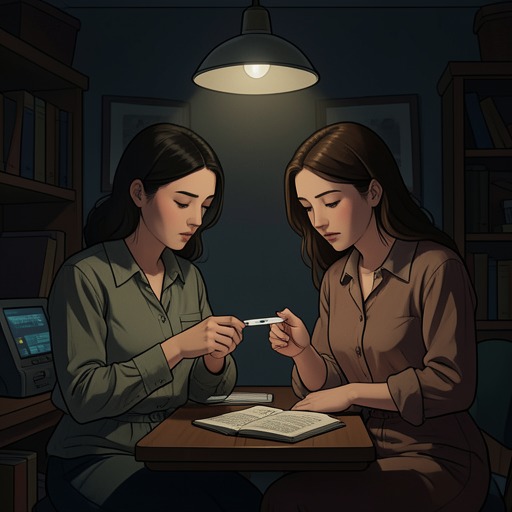
When Julia tells her mother that she is pregnant, her mother first looks from Julia’s stomach to Ro’s and jokes about how the two of them decided which would become pregnant. Julia answers sarcastically that they used rock-paper-scissors, and her mother continues the joke by asking who won. Julia still laughs when recalling the exchange. She imagines Ro becoming a brilliant mother because Ro can make a child laugh, just as Julia’s mother could. The joke makes pregnancy part of the family’s shared humor rather than a solemn announcement alone.
Narrative Role and Legacy
Julia’s mother is characterized indirectly, through the effects she has on Julia’s choices and memories. The account gives her no extended independent scene; instead, small details accumulate: office cleaning, leaving a violent man, protecting Julia from hatred, valuing humor, and responding to her daughter’s love with teasing insight. Together they show a person whose resilience does not require a denial of hardship.
Her influence also links different stages of Julia’s life. The advice about Ro helps Julia recognize an attachment she had been resisting, while the pregnancy anecdote shows that the mother’s humor remains a source of comfort and laughter. Julia’s expectation that Ro will be a wonderful mother draws on the same quality she associates with her own mother: the ability to make a child laugh. Through these recollections, Julia’s mother persists as a standard for love that is affectionate, unsentimental, and alive to the comedy of ordinary life.